

Keyword Stuffing and the impact of the panda algorithm on SEO
In the early days of SEO, many websites believed that repeating a keyword multiple times could
improve their ranking on Google. As a result, keyword stuffing became one of the most commonly
Use SEO techniques to manipulate search engine resulte. However, as Google’s algorithm evolved,
especially with the introduction of the panda algorithm, this strategy became ineffective and even
harmful. Today, Google focuses more on content quality, relevance, and user experience rather than
excessive keyword usage.
In this article, we’ll explore what keyword stuffing is, why it negatively affects SEO, and how Google
panda changed the way content is evaluated.
Let’s first look at what keyword stuffing actually is :
Keyword stuffing has become one of the most important discussions in Google SEO today.
When you write an article and optimize it for SEO, you may notice that you need to repeat the main
keyword throughout the content in appropriate places. This repetition helps Google understand what
your content is about.
Let’s analyze this with an example. When you talk to someone, you usually choose a specific topic and
discuss it, right?
For instance, Let’s say the topic is website design. When you talk about this subject, you don’t
repeatedly use the exact same phrase in every sentence. Instead, you use the synonyms and related
terms. If you keep repeating “website design” in every paragraph, the listener would quickly lose
interest and stop paying attention.
Example :
We are a website designer team, and we design outstanding website. Our website design is mostly
3D-based, and this type of website design is quite rare. We consider ourselves among the best in the
world. Our website design pricing is affordable, and compared to other 3D website design services,
we offer much lower prices.
As you can see, the text becomes boring and confusing over time.
Now let’s look at a better version using more natural wording and synonyms:
We are a web design team, and we create outstanding websites. We are highly skilled in web
development and can build visually advanced and creative web experiences at competitive prices.
You can clearly see how much smoother and more enjoyable the second version is to read.
The same concept exists in Google SEO. When working on SEO, you should focus on keeping users
engaged on your website. This not only helps search engine crawlers understand your content but
also improves the overall user experience.
By now, you should understand what keyword stuffing means. In general, you should use your main
keyword naturally, along with synonyms, and most importantly, adjust keyword usage based on the
length of your content. This is known as keyword distribution.
Now let’s get to the main point. So far, we have understood what keyword stuffing actually is, and
now I want to show some examples of websites that have been affected by the Panda Algorithm and
keyword stuffing.
Take a look at this :
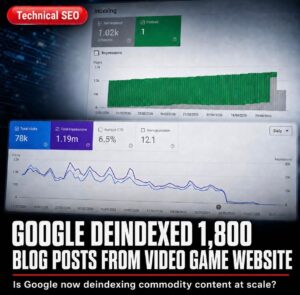
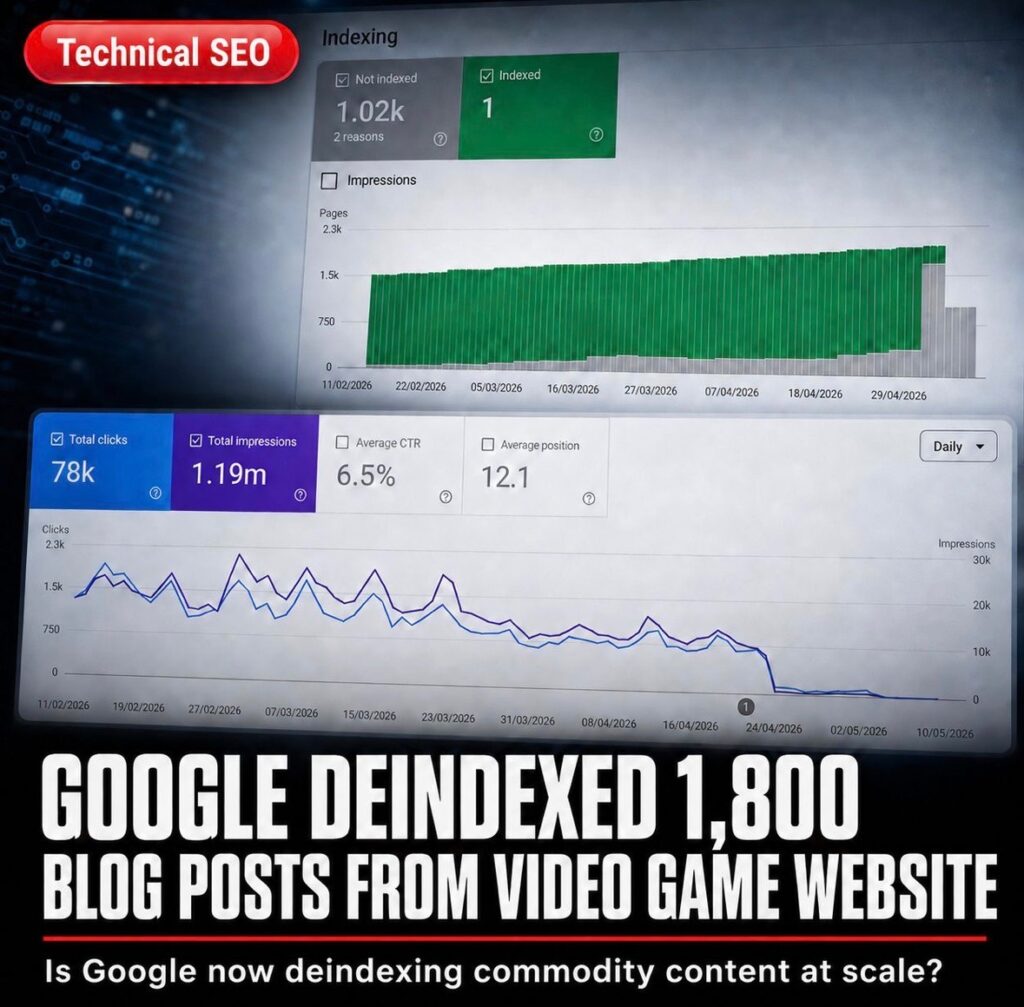
This screenshot was shared by a Reddit user whose website experienced a significant drop in
impressions and CTR.
The Reddit user said that they were publishing 5 articles every day without interruption and believed
they were doing SEO professionally, yet this happened to their website.
Let’s analyze this logically and form our own conclusions.
First of all, publishing 5 articles per day or producing content in large quantities does not necessarily
have a positive impact. Why? Because our focus becomes divided between 5 different pieces of
content, making it difficult to create truly well-structured and high-quality content.
I have a suggestion for this Reddit user. What if they had published only 1 piece of content per day
and focused more on that content? What if they had created one professionally optimized SEO article
instead of publishing 5 average-quality articles every day? Wouldn’t that have been a better approach?
When I say “complete content,” I mean following some of the fundamental principles of SEO content
creation. One of these principles is having proper keyword distribution. Another is avoiding
unnecessary repetition of the same keyword and using synonyms instead. This is just one of the ways
to improve content quality.
So perhaps publishing less content while focusing more on quality could be a better strategy.
Now, this was just one possible reason why this Reddit user’s website experienced such a problem. In
addition to maintaining proper keyword distribution and using keyword synonyms, they also needed
to focus more on content quality itself, because several different factors could be involved.
One of those factors is thin content. When thin content exists on your website, it acts like a virus that
gradually destroys your website in Google’s eyes.
Now, Let’s we have examine what authoritative sources have to say about this
topic :
According to Google’s official Spam Policies, keyword stuffing is the practice of filling a webpage with
keywords or numbers in an attempt to manipulate rankings in Google Search results.
Google specifically mentions that keyword stuffing often occurs when keywords appear unnaturally,
out of context, or are repeated excessively throughout a page. One of the examples provided by
Google is the repetition of the same phrase so many times that the text no longer sounds natural to a
human reader.
What is particularly interesting is that Google does not focus solely on the presence of keywords.
Instead, the company emphasizes the overall reading experience. Google states that filling pages with
excessive keywords creates a negative user experience and can harm a website’s rankings.
This statement alone changes the way we should think about SEO. Many website owners still believe
that repeating a keyword more times will send stronger signals to search engines. However, Google’s
own documentation suggests the opposite. When keyword usage begins to interfere with readability
and usefulness, it becomes a problem rather than an advantage.
In simple terms, Google’s position is clear: keywords should help explain a topic, not dominate the
content. The goal is to create information-rich content where keywords appear naturally within the
context of the discussion rather than being inserted repeatedly for ranking purposes.
(Source: Google Search Central – Spam)According to Search Engine Journal, keyword stuffing was once a widely used SEO tactic because early
search engines relied heavily on keyword frequency to understand page topics. As a result, many
website owners attempted to improve rankings by repeating the same keyword excessively
throughout their content.
However, Search Engine Journal explains that modern search engines have become significantly more
advanced. Rather than simply counting keywords, algorithms now evaluate content quality, context,
relevance, and user satisfaction. Because of these improvements, keyword stuffing is no longer
considered an effective SEO strategy.
The publication also points out that excessive keyword repetition can send negative quality signals to
search engines. When content appears unnatural or overly optimized, it may be interpreted as an
attempt to manipulate rankings rather than provide genuine value to users.
Another key observation is that keyword stuffing often reduces the overall quality of content. Instead
of helping readers understand a topic, repetitive keywords can make text difficult to read and less
engaging. This creates a poor user experience, which is the exact opposite of what modern search
engines are trying to reward.
Search Engine Journal therefore recommends focusing on topical relevance, natural language,
semantic keywords, and user intent rather than trying to achieve a specific keyword density. The
emphasis should always be on creating content that serves readers first and search engines second.
(Source: Search Engine Journal – Keyword Stuffing Ranking Factor Analysis.)
According to Moz, keyword stuffing is one of the most recognized forms of over-optimization in SEO.
While keywords remain an important signal for search engines, Moz emphasizes that there is a
significant difference between strategic keyword usage and excessive keyword repetition.
Moz explains that search engines have evolved far beyond simple keyword matching. Modern
algorithms are capable of understanding the relationship between words, the context of a topic, and
the overall meaning of a page. Because of this, repeating the same keyword dozens of times provides
little to no additional value.
The company also highlights that overusing keywords can negatively impact readability. When
content is written primarily for search engines instead of users, it often becomes repetitive, unnatural,
and difficult to engage with. As a result, visitors may leave the page without fully consuming the
content.
Another important point raised by Moz is that successful SEO content typically includes related terms,
variations, and semantically connected phrases. These elements help search engines understand the
depth of a topic while allowing the content to remain natural and user-friendly.
From Moz’s perspective, the goal of SEO should not be to maximize keyword frequency. Instead, the
objective should be to create comprehensive content that answers user questions effectively while
incorporating keywords in a natural and meaningful way.
(Source: Moz SEO Learning Center – Keyword Stuffing and On-Page Optimization.)
According to Google’s Webmaster Guidelines, keyword stuffing is not just considered a poor SEO
practice—it is classified as a spam technique that attempts to manipulate search rankings.
Google explains that many website owners make the mistake of believing that adding more keywords
will increase a page’s relevance. However, Google’s guidelines clearly state that loading a page with
excessive keywords often results in content that appears unnatural and provides a negative user
experience.One of the most important statements from Google’s documentation is that website owners should
focus on creating useful, information-rich content that uses keywords appropriately and in context.
This means that the purpose of a keyword is to help explain a topic, not to artificially increase a page’s
chances of ranking.
Google also emphasizes that when keywords are inserted repeatedly without adding meaningful
value, the content begins to look manipulative. At that point, the page is no longer optimized for
users; it is optimized solely for search engines. Modern algorithms are specifically designed to identify
this behavior.
This is an important reminder for anyone working in SEO today. Google’s recommendation is not to
increase keyword frequency but to improve content quality, relevance, and usefulness. The more
naturally a keyword fits within the content, the more likely it is to contribute positively to the overall
user experience.
(Source: Google Webmaster Guidelines and Google Search Central documentatio)
According to Ahrefs, keyword stuffing is considered an outdated SEO practice that no longer provides
any ranking advantage in modern search engines.
Ahrefs explains that in the early days of SEO, search engines relied heavily on keyword frequency to
determine the topic of a page. This led many website owners to believe that repeating keywords as
much as possible would improve their rankings. However, this approach quickly became ineffective as
search engines evolved.
Modern algorithms are now capable of understanding context, intent, and semantic relationships
between words. Because of this advancement, keyword density is no longer a reliable ranking factor.
Instead, search engines evaluate whether the content fully satisfies user intent and provides
meaningful information.
Ahrefs also points out that keyword stuffing often leads to poor-quality content. When writers focus
too much on inserting keywords, the natural flow of the text is disrupted, making it less engaging and
harder to read for users. This negatively impacts important user behavior signals such as time on page
and bounce rate.
In addition, Ahrefs emphasizes that over-optimized content can appear spammy, which may reduce
trust from both users and search engines. As a result, websites that rely on keyword stuffing are
unlikely to achieve long-term SEO success.
The recommended approach, according to Ahrefs, is to write naturally, use variations of keywords,
and focus on covering the topic comprehensively rather than repeating specific phrases.
(Source: Ahrefs Blog – SEO Best Practices and Keyword Usage Guidelines.)
According to Wikipedia, keyword stuffing is an SEO technique that involves the excessive and
unnatural repetition of keywords within web content in an attempt to manipulate search engine
rankings.
Wikipedia describes this practice as an example of search engine spam, where the primary goal is not
to improve content quality but to influence how search engines interpret the relevance of a page. In
many cases, keyword stuffing results in text that is repetitive, difficult to read, and lacking in
meaningful information for users.
The Wikipedia entry also highlights that keyword stuffing was more common in the early stages of
search engine development, when ranking algorithms were less advanced and relied heavily on
keyword frequency as a signal of relevance. However, as search engines evolved, they became better
at understanding context and identifying manipulative tactics.Because of these improvements, keyword stuffing is now considered an outdated and ineffective SEO
strategy. Modern search engines prioritize content quality, relevance, and user experience over
simple keyword repetition.
Wikipedia also notes that search engines may penalize or ignore pages that engage in keyword
stuffing, as such practices are seen as attempts to manipulate ranking systems rather than provide
value to users.
(Source: Wikipedia – Keyword stuffing.)
Now that we understand what keyword stuffing is and why it is important to
recognize it, we can move on to the practical analysis :
First of all, before starting content creation, we need to analyze this topic in a way that allows us to
move forward without any issues during the writing process.
The second step is to carefully evaluate whether our content with 1,000 words is enough to guide the
user to their goal, or whether we need to expand it further. In some cases, we may be able to achieve
the user’s intent with a shorter 700-word article, while in other cases we need deeper and more
detailed content.
The third step is analyzing keyword distribution within the content. For example, if we are writing a
1,000-word article, it may include around 8 paragraphs, while another article might require 12
paragraphs. In each paragraph, we need to evaluate whether keyword usage is necessary or not. This
helps ensure that keywords are distributed naturally throughout the content instead of being forced.
The fourth step is paying attention to the number of keyword repetitions. A general standard might
be around 10 to 12 mentions, but this should not be applied rigidly. Instead, it should be adjusted
based on content structure, user intent, and topic depth. In some cases, a well-written article can
guide the user to their goal without needing to repeat the keyword excessively. Overuse can harm
both user experience and website performance, as it may push users away and negatively affect SEO.
Now let’s move on to the final step.
The final step is to tag or mark the keywords you plan to use during content creation, and then
replace those markers with appropriate synonyms. This ensures that the content remains natural,
readable, and semantically rich while still maintaining SEO relevance.
Now that we have reviewed what authoritative sources and SEO experts say about
keyword stuffing, let’s move on to our own analysis and conclusion:
From a scientific and modern SEO perspective, keyword stuffing can be understood as a mismatch
between content optimization and user intent. While early search engines relied heavily on keyword
frequency as a ranking signal, current algorithms are designed to evaluate content in a much more
complex way.
Today, search engines use multiple signals such as semantic relevance, user engagement, content
depth, and contextual understanding to determine the quality of a page. This shift means that simply
repeating a keyword no longer contributes positively to rankings and may instead signal low-quality
or manipulative content.Therefore, keyword stuffing should not be viewed only as an outdated SEO tactic, but also as a
misunderstanding of how modern search engines interpret language and meaning. Effective SEO now
depends on balancing keyword usage with natural writing, topic coverage, and user-focused content
creation.
Conclusion :
Keyword stuffing is no longer an effective SEO strategy in modern search engines. As algorithms like
Google’s Panda have evolved, the focus has clearly shifted from keyword frequency to content quality
and user experience.
Today, successful SEO depends on creating valuable, well-structured, and user-focused content rather
than repeating keywords in an unnatural way. Websites that prioritize real value for users are far
more likely to achieve sustainable rankings and long-term gr